Blog
Thank you! Your submission has been received!
Oops! Something went wrong while submitting the form.

From the Field
What We Learned Building an AI Eval System with a Reentry Nonprofit
Participants loved using the AI mock interview coach, but was it actually getting them ready for job interviews?
Read the story
Participant Stories
Present, Proud, and Purposeful: The Transformation of Jeremy
Talking to Jeremy, one of the first things he will share is how proud he is of his daughter, and his joy for her blossoming career as a wrestler with aspirations of making her way to the WWE. He is proud that he is able to provide for his kids, grandchildren, has a beautiful apartment and the 401K he always imagined. What is harder to imagine is that this joyful, grateful man spent a good chunk of adulthood incarcerated. With his final bid he made a choice to dedicate over a year to his mental health and self improvement in an intensive cognitive behavioral therapy program and halfway house before feeling ready to be the best man he could be and return to his family. Today, he considers it a privilege to stay current on his child support, but even more so to be an active, present force in the lives of his children and grandchildren.
Read the story
Participant Stories
Oscar's Drive: Turning Obstacles into Opportunities
Oscar missed several pivotal years of his sons’ lives, serving two prison terms that totaled nearly a decade. Coming home was not easy. He faced near-homelessness and struggled to put gas in his car. In fact, he often relied on bus passes from the probation office to travel to job interviews. He simply couldn’t afford the fuel to navigate LA traffic.
Read the story
Participant Stories
Shawn’s Life Lesson: The Harder You Work, the More it Pays Off
When Shawn walked into the Center for Employment Opportunities (CEO) Memphis office in 2024, the New Orleans native felt like that was his last chance. He’d tried everything to get a job. More importantly, he needed to get an apartment because he wanted to support his young daughter, but nothing was working out.
Read the story.png)
Participant Stories
How Learning a New Trade Can Help Justice-Impacted Workers
Micah was born in California and raised on a ten‑acre ranch in Fresno. He grew up surrounded by cattle, wooden fences, and the open sky. During his childhood, his family instilled in him values and proper work ethics. Nevertheless, he found himself aimless, having dropped out of high school. As a result, he bounced between fast‑food and gas station jobs without purpose or motivation.
Read the story
Participant Stories
Essence’s Story: The False Start
When Essence returned home to Oklahoma, she did not lack credentials. She holds an associate’s degree in nursing, holds a Peer Recovery Support Specialist certification, and boasts a history of steady employment, during which she could secure a new role within a single week. She was highly qualified and motivated to work, but navigating life as a justice-impacted mother introduced an entirely new, agonizing roadblock: the false start.
Read the story
Participant Stories
Alex's Story: Why Fair Chances Start with Family Stability
When Alex returned home from prison, he wasn't returning to the same family he had left behind. The years had passed, and the child he had once worried about from behind prison walls was now an adult and a father himself, with daughters of his own. Alex was determined to be present for this next chapter of his family's life, showing up not just as a father, but as a grandfather.
Read the story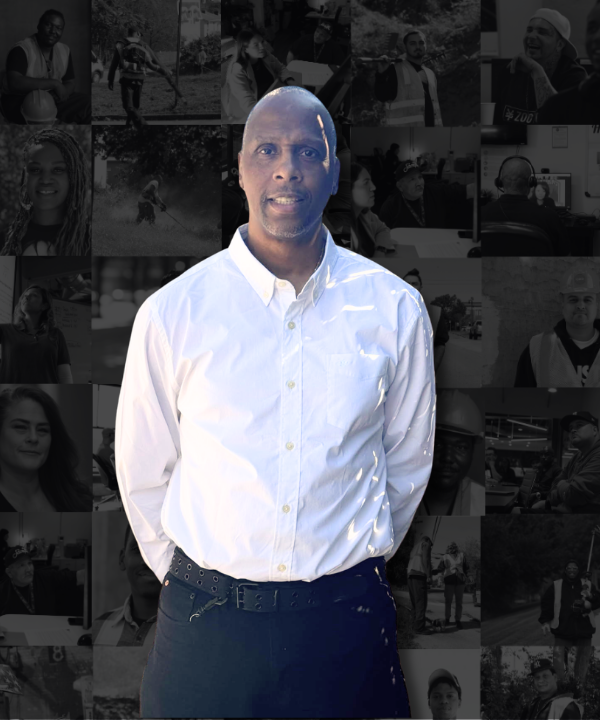
Participant Stories
Faith and Mindset Lead the Road to Redemption
Today, Henry is back behind the wheel, supporting his family and working toward his dream of one day owning his own truck. Just a few years ago, however, he was preparing to leave prison after spending six years incarcerated. The difference between those two versions of himself, he says, wasn't luck—it was faith, accountability, and a decision to change.
Read the story
Participant Stories
Tamilla’s Story: A State of Chaos
When Tamilla returned to Oklahoma in 2017, she held a master’s degree in psychology. She had no trouble landing a high-paying position, and she was earning more than three times the income required for an apartment. She was qualified, financially secure, and deeply committed to her career, but she immediately ran into a barrier that she could not outwork: Oklahoma's rental market.
Read the story
Participant Stories
Devanae’s Story: The Worth of a Worker
When Devanae came home to Oklahoma City, she faced an invisible barrier common to out-of-state arrivals: she simply did not know where to start. Because she carries a heavy charge on her past criminal record, finding an employer or a landlord willing to look past a background check and get to know her felt nearly impossible. The immediate transition was marked by isolated survival, lacking any real structural support until she connected with the Center for Employment Opportunities (CEO).
Read the story
Participant Stories
Sherry’s Story: The Invisible Wall
When Sherry came home to Oklahoma, she had a solid work history and a strong desire to provide for her family. Employers and supervisors had always loved her work ethic. Yet, despite doing everything right, she immediately ran into an invisible wall that blocked her from securing both a stable job and a safe place to live.
Read the story%20(600%20x%20720%20px)%20(21).png)
From the Field
Juneteenth and the Unfinished Work of Freedom
By Simone Price, Director of Organizing, Center for Employment Opportunities (CEO)
Read the story